
Transparency International, a non-profit organisation fighting against corruption and malpractices, gave Reliance Industries and ONGC ninth and 26th positions, respectively, in its latest report Transparency in Corporate Reporting.

Capital dumping is being used by foreign e-commerce firms to subsidise and engage in predatory pricing, oil-to-telecom conglomerate Reliance Industries (RIL) has told the Associated Chambers of Commerce and Industry of India (Assocham) in an internal document. The document alleges that this is leading to massive unemployment and financial distress among small merchants and kirana stores. It consists of various recommendations and proposed changes that deal with Press Note 2 of 2018 (PN 2), which RIL wanted Assocham to present to the government, according to sources.

Are the big five using their dominance to shut out rivals? That is the key question, says Prosenjit Datta.

India has the third highest number of billionaires in the world after the US and China, according to a new list by the prestigious Forbes magazine, which said Reliance Industries chairman Mukesh Ambani reclaimed his spot as Asia's richest person, dethroning Chinese business tycoon Jack Ma who was the richest person in the region a year ago.

Will open radio access network technology (O-RAN) disrupt the way 5G networks roll out in the country? After all, it promises to offer a substantially lower capital cost, enables the choice of an array of vendors, and provides more network flexibility - all very important for telcos who expect to invest over Rs 60,000 crore to roll out a pan-India 5G network and that's without spectrum costs. But more importantly, it counters the stranglehold of global telecom gear makers such as Ericsson, Nokia, and Samsung over telcos to whom they sell propriety technology and bundled hardware and software.

The 'buy-now, pay-later' (BNPL) juggernaut continued to roll on during the festive season with multiple players seeing disbursals grow by more than 100 per cent compared to Diwali last year. LazyPay, the BNPL platform of Prosus-owned payments major PayU, witnessed a credit demand increase of 300 per cent over the festive season last year, especially in segments like travel, food & beverages and entertainment. "We also saw an uptick of 70 per cent in user acquisition in the last two months.

The power of the small neighbourhood retailer can barely be ignored as organised players look to leverage their last-mile connectivity and reach, luring them by promising support in technology, inventory and tax management.

Did top Indian business groups miss the e-commerce opportunity by focusing on replicating the Walmart model instead of following the Amazon model of online shopping?

Jeff Bezos of Amazon tops the list for the second consecutive year with networth of $147 billion.

E-commerce firms like Amazon, Flipkart, Myntra and others witnessed successful festive season sales this year, Experts say e-commerce adoption in the country is accelerating by multiple years or what it would have looked like in 2025.

That's because India does not have a serious venture capital industry with an appetite for risk, observes T N Ninan.

The proposed amendments to the Consumer Protection (E-Commerce) Rules, 2020, that are envisioned to protect consumer interests, may further compound the impact of multiplicity of regulations on the e-commerce sector, the Indo-American Chamber of Commerce (IACC) had told the ministry of consumer affairs. IACC, the apex bilateral chamber for Indo-US business, had told the government that the proposed amendments would increase compliance liabilities that risk severely impairing the growth of the sector.

Fresh capital will help Flipkart further grow its e-commerce marketplace in India as the world's second-largest internet market begins to recover from the COVID-19 crisis.

The 20 richest people on the planet are worth a staggering USD 1.2 trillion, a sum roughly equivalent to the annual economic output of Mexico.

IIM Lucknow has concluded its 2020-21 final placements.

CEOs expect to finish the ongoing March quarter with positive growth as the corporates get back to work in full strength.

Billionaire Mukesh Ambani's four-year-old telecom venture Reliance Jio has been ranked the fifth strongest brand globally behind the likes of Ferrari and Coca-Cola. The Brand Finance's Global 500 ranking of the strongest brands globally, which determined the relative strength of brands, is topped by WeChat, according to its annual report on most valuable and strongest global brands.

Everyday consumerables, such as grocery and order-in food items are the key buyout sector, analysts say, and a major reason for kirana stores' digitisation push.
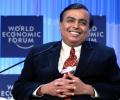
The net worth of India's richest man, Mukesh Ambani, dropped 28 per cent, or USD 300 million a day for two months to USD 48 billion as on March 31 due to the massive correction in stock markets, a report said on Monday. The chairman and managing director of the diversified Reliance Industries saw his wealth decline by USD 19 billion (app Rs 144,400 crores) in the February-March period, taking his global ranking down eight places to 17th, the Hurun Global Rich List said.

Total of 11 private Indian firms have made it to the list of 500 most valuable companies across the world, and the country is ranked 10th on the chart, as per a report. The total value of these 11 companies grew 14 per cent and has been pegged at $805 billion or nearly a third of the Indian GDP. All these companies in the list of non-state enterprises have gained in value during 2020, which was hit by the pandemic, barring tobacco major ITC and second largest private sector lender ICICI Bank, as per the 'Hurun Global 500' report.

'Post-Covid world will be different from the pre-Covid world.'

The recognition that content - video in particular - will be the next big thing in the telecom wars requires no rocket science.

As cinemas remain shut and watching movies on big screen still a distant dream, OTT platforms are keeping us distracted from the pandemic with its steady supply of content.

The numbers in India may not be as big but the opportunity for serious growth is all there.

Policy constraints may prevent many of the global retail giants from reaching their full potential.There are too many restrictions right now in the sector and policy makers lack clarity.

While global competitors Amazon and Walmart are looking to explore B2B online in India, traditional Indian retailers like the Future group and Reliance Retail and e-commerce players such as Snapdeal and Flipkart have no immediate plans in this area.

Forty Indians entered the billionaires' club in the pandemic-stricken 2020 to take the number of those in the coveted list to 177 people, a report said on Tuesday. Mukesh Ambani continued to be the wealthiest Indian with a networth of $83 billion. The head of Reliance Industries witnessed a 24 per cent jump in fortunes and climbed up one spot to be the eighth richest globally, as per the Hurun Global Rich List. Gautam Adani from Gujarat, who has had a spectacular rise in fortunes in the last few years, saw his wealth almost doubling to $32 billion in 2020 and climbed 20 places to be the 48th richest person globally and the second wealthiest Indian.

Live commerce, quick commerce, group buying, WhatsApp commerce, dukaantech have made their mark.

Broadcasting and digital companies are ready to join the country's biggest ever auction of sports rights next year.
For now Walmart has said it remains optimistic about India. But that could change without prior notice, says Nivedita Mookerji.

Apart from digital advertising revenue, both companies want to reach out to the 'next billion' Indian customers. After all, around half of the 1.3 billion population is still not on the net and this represents a challenge as well as an opportunity.
With intense competition in telecom sector, the two companies are rushing to diversify into other revenue streams, prominent among which are cloud services.

The Board of Control for Cricket in India (BCCI) has pegged the base price for the combined IPL media rights at Rs 32,890 crore, nearly double the Rs 16,347 that Star Disney paid five years ago. Experts say that at these levels, there does not seem to be any profit-and-loss logic at play. It is more about what premium broadcasting companies are ready to spend for market share dominance. They point out that due to competition, they expect the final price to hit Rs 40,000-50,000 crore.

Billionaire Mukesh Ambani on Friday backed the proposed data privacy and cryptocurrency bills, saying India is putting in place the most forward-looking policies and regulations. Ambani, who has been a votary of Indians owning and controlling their own data and the nation drafting strict rules around how digital information is stored and shared, said nations have the right to build and protect strategic digital infrastructure. Stating that data is the 'new oil', he said every citizen's right to privacy has to be safeguarded. "India is putting in place the most forward-looking policies and regulations," he said at the Infinity Forum, hosted by International Financial Services Centres Authority (IFSCA).

Chinese mobile brands are deeply entrenched in the Indian market. A move to bar them may send a bold diplomatic message. But its cost for the local industry is anybody's guess. In the event that Chinese brands face curbs, two handset makers - Samsung and Apple - squarely stand to gain.

Walmart, the world's largest retailer, is tripling its sourcing from India to about $10 billion a year by 2027, said Judith McKenna, president, and chief executive officer of Walmart International, the segment which includes the company's operations outside the US. "To achieve this, we are growing our sourcing team in India," said McKenna, during a fireside chat with YourStory founder Shradha Sharma at Converge@Walmart, the flagship event of Walmart Global Tech India. "Walmart has a 20-year history of sourcing from India and already exports more than $3 billion worth of Made-in-India goods each year to 14 markets worldwide." McKenna said the company has expertise in processes such as international standards and demand forecasting that businesses need to get ready to export.

This year's list includes 40 influential people under 40 years of age in five categories -- finance, technology, healthcare, government and politics, and media and entertainment.

The race to get a New Umbrella Entity (NUE) licence for digital payments may get crowded. As many as six consortiums are said to be in the fray to apply for an NUE licence, which would create a for-profit National Payments Corporation of India (NPCI)-like body for retail payments. A consortium led by Financial Software and Systems (FSS), a leading provider of payment products and payment processor, is in talks and may file an application to the RBI for an NUE license, said sources aware of the development. The other constituents of this group include Indian Bank, Central Bank of India, India Post Payments Bank, National Bank for Agriculture and Rural Development (Nabard), and a few small finance banks.

'Maybe it's time for Plan B for the film industry.'

As India's online population crosses 450 million, e-commerce ventures are trying to grab a pie of online sales estimated to hit $48 billion by 2020.
 © 2026 Rediff.com - Advertise with us - Disclaimer - Privacy Policy - Sitemap - Feedback - About us - Terms of use - Grievances